
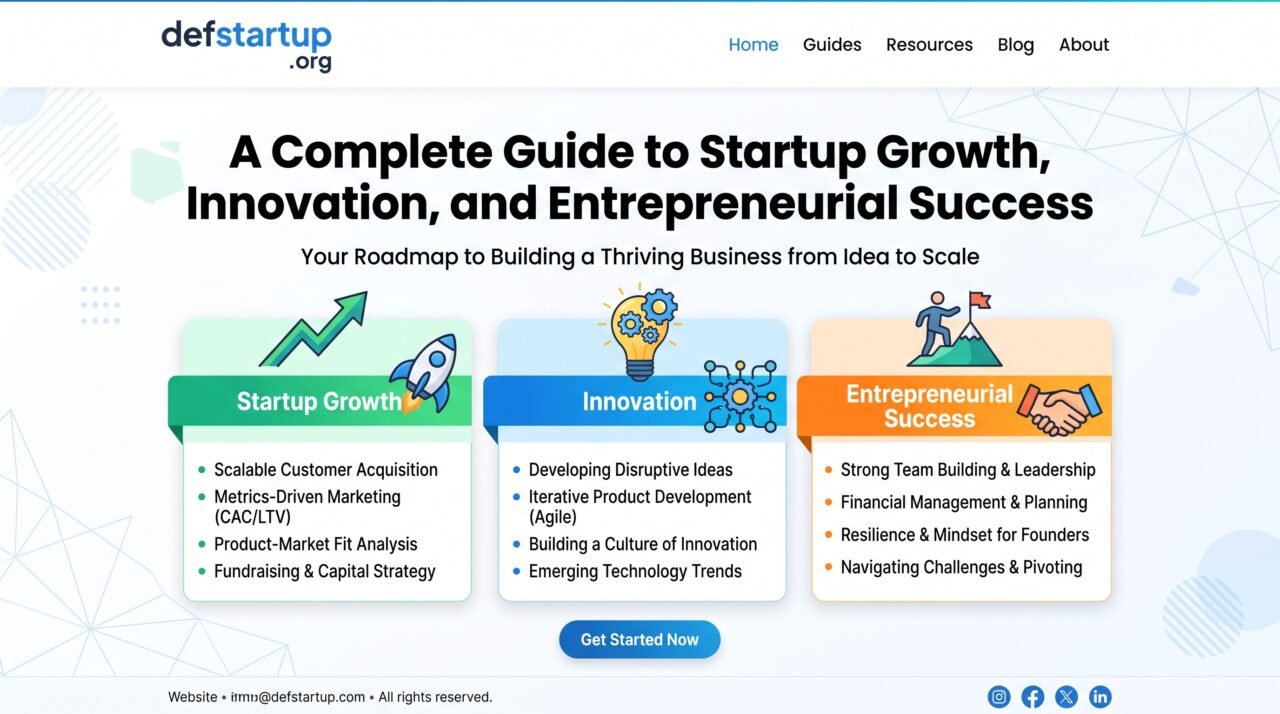

Launching a successful startup requires more than a great idea. Entrepreneurs need reliable guidance, practical resources, and proven strategies to navigate the challenges of building a sustainable business. defstartup .org has emerged as a valuable platform for founders seeking insights into innovation, business development, funding, digital transformation, and long-term growth.
Whether you are starting your first venture or scaling an existing company, understanding the principles behind successful entrepreneurship can significantly improve your chances of success. This guide explores how defstartup .org supports entrepreneurs through actionable knowledge, strategic planning, and practical business advice.
Why defstartup .org Matters for Modern Entrepreneurs
Today’s startup ecosystem is highly competitive. Founders must continuously adapt to changing technologies, customer expectations, and market trends. Platforms like defstartup .org provide educational resources that simplify complex business concepts into practical guidance.
Instead of relying solely on theory, entrepreneurs benefit from real-world examples, strategic frameworks, and actionable recommendations that help them make informed decisions throughout every stage of their business journey.
Building a Strong Startup Foundation
Every successful company begins with a clear vision. Entrepreneurs should identify a genuine market problem before developing products or services that provide meaningful solutions. Strong market research reduces uncertainty and helps validate business ideas before significant investments are made.
defstartup .org emphasizes the importance of planning, customer validation, competitive analysis, and financial preparation. These core elements create a stable foundation that allows startups to grow with confidence instead of relying on assumptions.
Innovation as a Competitive Advantage
Innovation extends beyond creating new technology. It includes improving customer experiences, streamlining operations, and discovering better ways to solve existing problems. Businesses that embrace continuous innovation are more likely to remain competitive in evolving markets.
Entrepreneurs using insights inspired by defstartup .org often focus on experimentation, customer feedback, and iterative improvement. Small but consistent innovations frequently generate greater long-term success than occasional major breakthroughs.
Essential Skills Every Founder Needs
Successful founders combine technical knowledge with leadership skills. Communication, negotiation, strategic thinking, and financial management are equally important for building sustainable businesses.
Developing emotional intelligence also helps entrepreneurs lead teams effectively, resolve conflicts, and maintain motivation during periods of uncertainty. Continuous learning remains one of the greatest competitive advantages for startup leaders.
Common Startup Challenges
Many startups struggle with limited funding, customer acquisition, hiring qualified employees, and managing rapid growth. These challenges are normal and should be expected during the early stages of business development.
The resources available through defstartup .org encourage founders to prepare contingency plans, monitor financial performance carefully, and remain flexible when market conditions change. Adaptability often separates successful startups from unsuccessful ones.
Digital Transformation and Business Growth
Technology has transformed nearly every industry. Cloud computing, automation, artificial intelligence, data analytics, and digital marketing allow startups to compete with much larger organizations.
Entrepreneurs who leverage digital tools improve operational efficiency while delivering better customer experiences. defstartup .org highlights the importance of embracing technology without losing focus on customer value and business objectives.
Startup Growth Strategies
Growth requires deliberate planning rather than simply increasing sales. Businesses should identify scalable processes, build strong customer relationships, and create repeatable systems for marketing, sales, and support.
A sustainable growth strategy balances expansion with operational stability. Rapid growth without proper planning can overwhelm internal resources and negatively affect customer satisfaction.
| Business Area | Key Focus | Expected Benefit |
|---|---|---|
| Market Research | Customer needs | Better product-market fit |
| Financial Planning | Cash flow management | Business stability |
| Marketing | Brand awareness | Customer acquisition |
| Technology | Automation | Improved efficiency |
| Customer Support | Satisfaction | Higher retention |
| Innovation | Continuous improvement | Long-term competitiveness |
Funding Opportunities
Securing capital remains one of the biggest concerns for founders. Funding options include personal savings, angel investors, venture capital, crowdfunding, grants, and traditional business loans.
Before seeking investment, entrepreneurs should develop realistic financial projections, a compelling business model, and a clear explanation of how funding will accelerate growth. Investors typically support businesses that demonstrate measurable traction and scalable opportunities.
Leadership and Company Culture
An organization’s culture influences productivity, innovation, and employee satisfaction. Leaders who encourage transparency, accountability, and collaboration create environments where talented professionals can thrive.
According to management expert Peter Drucker, “The best way to predict the future is to create it.” This mindset reflects the entrepreneurial philosophy promoted through defstartup .org, where proactive decision-making and continuous improvement are central themes.
The Future of Entrepreneurship
Emerging technologies, sustainability initiatives, remote work, and global digital markets continue reshaping entrepreneurship. Businesses that remain flexible and prioritize lifelong learning will be better positioned for future opportunities.
As industries evolve, founders should regularly evaluate market trends while maintaining a strong commitment to customer value. Long-term success depends on balancing innovation with disciplined execution.
Conclusion
Building a successful startup requires persistence, strategic thinking, and access to reliable information. defstartup .org serves as a valuable knowledge resource for entrepreneurs seeking practical guidance across business planning, innovation, leadership, funding, and digital transformation.
Rather than chasing short-term trends, entrepreneurs should focus on creating sustainable value for customers while continuously improving their operations. By applying proven business principles, embracing innovation, and making informed decisions, founders can build organizations capable of long-term growth and resilience in an increasingly competitive marketplace.
Read more: Foxfiny Com: A Comprehensive Guide to Understanding the Platform