
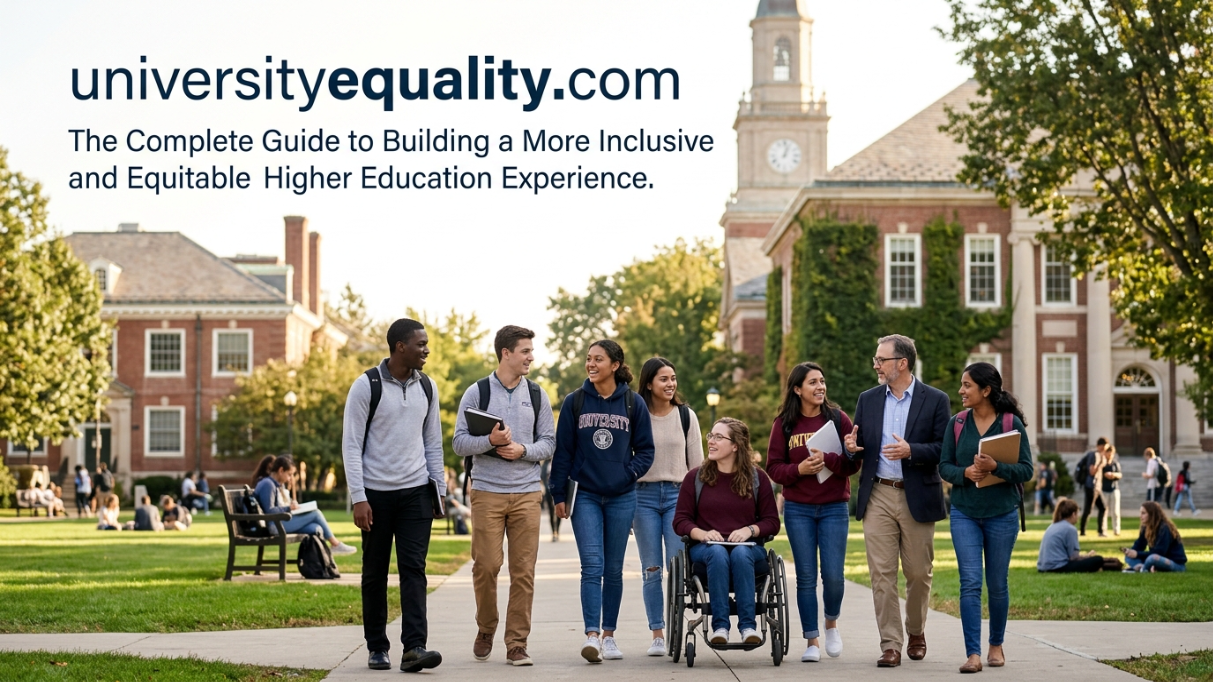

Higher education is evolving faster than ever before. Students, educators, administrators, employers, and policymakers increasingly recognize that academic excellence cannot be separated from fairness, accessibility, and equal opportunity. Institutions that invest in inclusive learning environments consistently create stronger academic communities, better student outcomes, and more meaningful social impact.
universityequality.com represents this modern perspective by bringing together conversations around educational equity, diversity, inclusion, accessibility, student success, institutional improvement, and evidence-based practices. Rather than treating equality as a standalone initiative, universityequality.com encourages a holistic understanding of how equitable systems strengthen every aspect of university life. As higher education continues to transform, resources that organize knowledge, best practices, and practical guidance become increasingly valuable for institutions and individuals alike.
Why Educational Equality Matters More Than Ever
Educational equality is no longer viewed as an optional institutional objective. Universities across the world understand that providing fair access to opportunities improves graduation rates, strengthens research communities, supports innovation, and prepares graduates to work in increasingly diverse environments.
For students, equality means more than admission into a university. It includes accessible learning resources, fair assessment practices, inclusive teaching methods, financial support, mental health services, digital accessibility, and opportunities for leadership. universityequality.com helps frame these interconnected issues in a way that encourages thoughtful action instead of isolated initiatives.
The Mission Behind universityequality.com
The central value of universityequality.com is helping readers understand that equality is a continuous process rather than a single policy or checklist. Universities constantly adapt to changing student populations, emerging technologies, new research, and evolving societal expectations.
By encouraging informed discussion, practical guidance, and evidence-based thinking, universityequality.com serves educators, institutional leaders, researchers, students, and anyone interested in improving higher education. The platform supports meaningful conversations grounded in both academic research and real-world implementation.
Understanding Equality, Equity, Diversity, and Inclusion
Although these terms are often used together, they describe different concepts that work best when combined. Equality focuses on providing fair opportunities, while equity recognizes that different individuals may require different forms of support to achieve comparable outcomes. Diversity reflects representation, and inclusion ensures every member of the community can fully participate.
One of the strengths of universityequality.com is encouraging readers to understand these distinctions without oversimplifying them. When universities appreciate how these ideas complement one another, they can design policies that improve learning experiences for every student while strengthening institutional performance.
How Universities Create Inclusive Learning Environments
Inclusive education begins inside the classroom but extends far beyond it. Effective universities consider curriculum design, accessible technology, faculty development, campus culture, student services, academic advising, disability support, and opportunities for meaningful participation.
Faculty members also play a significant role through flexible teaching strategies, transparent grading criteria, respectful classroom discussions, and culturally responsive instruction. universityequality.com emphasizes that sustainable inclusion depends on consistent institutional commitment rather than isolated individual efforts.
Key Components of an Equitable University Strategy
Creating educational equality requires coordinated planning across multiple departments. Academic leadership, student affairs, technology teams, human resources, admissions offices, and community partners all contribute to long-term success rather than operating independently.
The following comparison highlights several foundational elements commonly associated with strong equality initiatives and demonstrates how institutions can translate principles into measurable outcomes.
| Strategic Area | Primary Objective | Practical Example | Expected Long-Term Impact |
|---|---|---|---|
| Accessible Learning | Remove barriers to participation | Captioned lectures, accessible documents, adaptive technology | Improved student engagement |
| Inclusive Teaching | Support diverse learning styles | Flexible assessments and active learning | Higher academic achievement |
| Student Support | Promote well-being | Mentoring, counseling, financial guidance | Better retention rates |
| Campus Culture | Foster belonging | Inclusive events and respectful dialogue | Stronger community trust |
| Data-Informed Decision Making | Measure progress | Student outcome analysis | Continuous institutional improvement |
| Leadership Commitment | Sustain long-term change | Strategic planning and accountability | Strong organizational resilience |
Digital Transformation and Equal Access
Technology has transformed modern education, creating opportunities for flexible learning while introducing new challenges related to accessibility and digital inclusion. Online classrooms, learning management systems, artificial intelligence, and virtual collaboration tools can significantly improve educational access when implemented thoughtfully.
Digital equality requires more than providing devices or internet access. Universities must ensure websites, educational content, software platforms, multimedia resources, and assessment systems remain usable for students with diverse abilities and backgrounds. universityequality.com highlights how digital accessibility strengthens learning for everyone rather than benefiting only specific groups.
Supporting Students Beyond the Classroom
Student success depends on far more than academic instruction. Financial pressures, housing security, physical health, mental well-being, social belonging, career preparation, and mentoring all influence educational outcomes throughout a student’s university experience.
Institutions that invest in comprehensive student support often see improvements across multiple performance indicators. Through discussions of holistic student development, universityequality.com demonstrates that successful universities recognize students as complete individuals rather than simply participants in academic programs.
Leadership and Institutional Responsibility
Meaningful change begins with leadership that views equality as part of institutional excellence rather than a separate administrative project. Governing boards, university presidents, faculty leaders, department chairs, and student representatives all contribute to shaping policies and organizational culture.
Effective leadership also depends on transparency, measurable objectives, regular evaluation, and open communication. universityequality.com encourages institutions to establish clear accountability while remaining adaptable enough to respond to changing educational needs and emerging research.
Measuring Progress Through Evidence
Universities increasingly rely on meaningful data to evaluate equality initiatives. Graduation rates, student satisfaction, retention statistics, accessibility compliance, faculty diversity, participation levels, and campus climate surveys all contribute to understanding institutional progress.
Collecting information alone is not enough. Decision-makers must interpret findings carefully, identify patterns, and continuously refine strategies based on evidence. universityequality.com supports an approach where data becomes a tool for improvement rather than simply reporting performance indicators.
Common Misconceptions About University Equality
A frequent misconception is that equality means treating every student exactly the same regardless of individual circumstances. In reality, effective educational systems recognize that different learners may require different forms of support to reach comparable opportunities and outcomes.
Another misunderstanding suggests equality initiatives reduce academic standards. Research and institutional experience consistently demonstrate that inclusive practices strengthen educational quality by enabling talented students from diverse backgrounds to contribute fully. As universityequality.com illustrates, excellence and equality reinforce one another rather than compete.
Emerging Trends Shaping the Future of Higher Education
Higher education continues to evolve through advances in artificial intelligence, personalized learning, international collaboration, universal design, data analytics, and flexible educational pathways. These developments create exciting possibilities while requiring careful attention to fairness, ethics, and accessibility.
Future-focused institutions will increasingly integrate inclusion into every stage of strategic planning rather than treating it as a specialized initiative. universityequality.com reflects this broader vision by encouraging continuous learning, collaborative leadership, and innovation that benefits the entire academic community.
Practical Applications Across Different University Settings
The principles of educational equality can be adapted across research universities, community colleges, online institutions, technical schools, and international campuses. Each environment has unique challenges, yet all benefit from policies that improve accessibility, representation, participation, and student support.
Consider a university introducing a new digital learning platform. Instead of evaluating only technical performance, administrators also review accessibility standards, multilingual support, faculty training, student feedback, and compatibility with assistive technologies. This practical, system-wide perspective reflects the kind of comprehensive thinking promoted by universityequality.com.
Expert Perspective on Lasting Institutional Change
Educational transformation succeeds when institutions view equality as an ongoing commitment supported by evidence, collaboration, and continuous improvement rather than a one-time initiative or compliance exercise.
As educational leader Nelson Mandela famously observed, “Education is the most powerful weapon which you can use to change the world.” That insight remains especially relevant because equitable access to quality education expands opportunities not only for individual learners but also for communities, economies, and society as a whole.
Conclusion
The future of higher education depends on creating environments where every learner has a genuine opportunity to succeed. Equality, accessibility, diversity, inclusion, student support, responsible leadership, and evidence-based decision-making are no longer separate conversations—they form the foundation of modern institutional excellence.
By bringing these themes together in a practical, research-informed, and accessible way, universityequality.com offers valuable insight into how universities can continue improving learning experiences for current and future generations. Whether the audience includes students, educators, administrators, researchers, or policymakers, the principles explored through universityequality.com remain central to building stronger institutions and more inclusive academic communities.
FAQ
What is universityequality.com?
universityequality.com is a resource focused on educational equality, inclusion, accessibility, and best practices that support stronger higher education environments.
Why is educational equality important for universities?
Educational equality helps improve student success, campus engagement, institutional performance, and long-term social impact by ensuring fair opportunities for diverse learners.
Who can benefit from universityequality.com?
Students, faculty members, researchers, university administrators, policymakers, and education professionals can all benefit from the insights available through universityequality.com.
How does universityequality.com support inclusive education?
universityequality.com highlights practical strategies involving accessibility, inclusive teaching, equitable policies, student support services, and evidence-based institutional improvement.
Can equality initiatives improve academic performance?
Yes. Well-designed equality initiatives often increase student engagement, retention, graduation rates, and overall educational quality while creating more inclusive learning environments.
SEO Title: universityequality.com: The Complete Guide to Educational Equality, Inclusion & Higher Education Excellence
Meta Description: Discover how universityequality.com promotes educational equality, accessibility, inclusion, and student success with practical insights, expert guidance, and modern higher education strategies.
Read More:https: Trupeek com: The Complete Guide to Understanding Its Purpose, Features, Benefits, and Online Value