
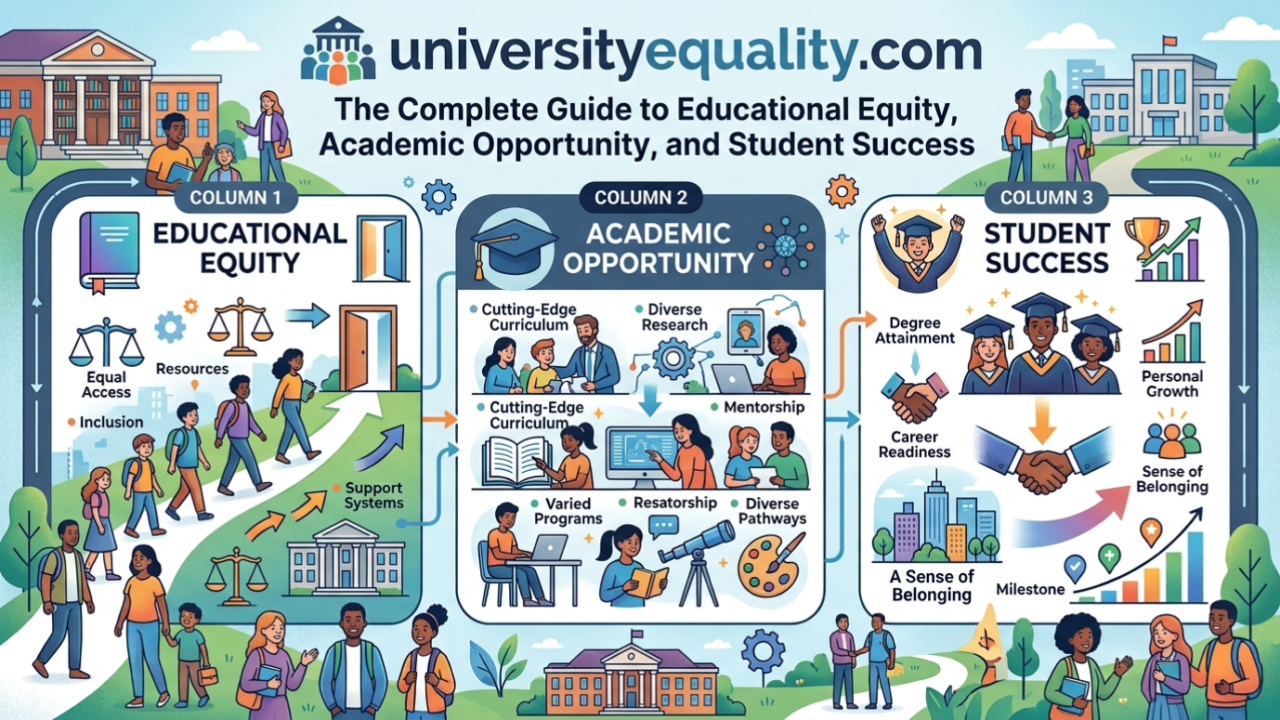

Education has always been one of the strongest drivers of personal growth, career advancement, and social progress. As universities continue adapting to technological innovation, changing student expectations, and global diversity, platforms dedicated to educational fairness have become increasingly valuable. universityequality com represents a growing interest in creating learning environments where every student has equal opportunities to succeed regardless of background.
Whether you are a student, educator, researcher, or policymaker, understanding the principles surrounding universityequality com provides valuable insight into how educational institutions can improve accessibility, inclusion, academic excellence, and long-term student outcomes. This guide explores the concept in depth while examining its practical applications, strategic importance, and future potential.
Understanding universityequality com
At its core, universityequality com centers on promoting equal educational opportunities across higher education environments. The concept extends beyond admissions and includes accessibility, diversity, student support, inclusive teaching practices, and equitable access to academic resources.
Rather than treating every student identically, effective educational equality recognizes that different learners often require different forms of support. Universities that embrace inclusive policies create stronger academic communities where diverse experiences contribute to richer learning outcomes.
Why Educational Equality Matters in Modern Universities
Higher education increasingly serves students from different cultures, economic backgrounds, abilities, and learning styles. Institutions that prioritize equality build stronger academic performance, improve graduation rates, and foster greater student satisfaction throughout the educational journey.
The growing relevance of universityequality com reflects this broader transformation. Universities now recognize that inclusive policies benefit not only underrepresented students but the entire academic community by encouraging collaboration, innovation, and broader perspectives.
Core Principles Behind universityequality com
Several foundational principles define the philosophy associated with universityequality com. These include fairness in admissions, equal access to learning resources, inclusive campus environments, accessible facilities, equitable assessment methods, and ongoing institutional accountability.
These principles work together rather than independently. A university may provide scholarships, for example, but without accessible technology, effective mentoring, or inclusive teaching methods, many students would still encounter unnecessary barriers to academic success.
Key Components of Educational Equality
Educational equality involves many interconnected elements that collectively shape the student experience. The following overview highlights several essential areas.
| Component | Purpose | Student Benefit | Institutional Impact |
|---|---|---|---|
| Inclusive Admissions | Broader access to education | Greater opportunity | Diverse student body |
| Financial Assistance | Reduce economic barriers | Improved retention | Higher enrollment stability |
| Accessible Learning Resources | Support all learners | Better academic performance | Increased educational quality |
| Inclusive Teaching | Address diverse learning styles | Higher engagement | Stronger classroom participation |
| Student Support Services | Academic and personal guidance | Improved well-being | Better graduation outcomes |
| Digital Accessibility | Equal online participation | Flexible learning | Modern educational delivery |
Each element reinforces the others. Strong educational equality depends on coordinated strategies rather than isolated initiatives, making comprehensive planning essential for lasting success.
How universityequality com Supports Student Success
Academic success rarely depends on intelligence alone. Students thrive when they have access to quality instruction, mentoring opportunities, financial support, mental health resources, and welcoming campus communities that encourage participation and belonging.
The philosophy represented by universityequality com emphasizes removing unnecessary obstacles before they become barriers. This proactive approach helps students focus on learning instead of overcoming avoidable institutional challenges.
The Role of Technology in Educational Equality
Technology has dramatically expanded educational opportunities through online learning platforms, digital libraries, assistive software, virtual classrooms, and adaptive learning systems. These innovations allow universities to reach students who previously faced significant geographical or physical limitations.
However, digital transformation also introduces new responsibilities. The vision promoted through universityequality com encourages institutions to ensure that technological advances remain accessible, affordable, and usable for every learner regardless of ability or socioeconomic status.
Diversity, Inclusion, and Equal Opportunity
Diversity enriches higher education by bringing together individuals with different experiences, viewpoints, and cultural backgrounds. Inclusive universities encourage respectful dialogue, collaborative learning, and broader critical thinking among students and faculty.
The broader mission associated with universityequality com recognizes that diversity alone is insufficient. Genuine equality requires creating environments where every student feels respected, supported, and able to participate fully in academic life.
Challenges Universities Continue to Face
Despite significant progress, many institutions still struggle with unequal access to educational resources, funding disparities, accessibility limitations, and varying levels of student support. Addressing these issues requires long-term institutional commitment rather than isolated policy changes.
Another common challenge involves balancing academic excellence with inclusivity. Successful universities demonstrate that high standards and educational equality are complementary goals rather than competing priorities, reinforcing the importance of thoughtful strategic planning.
Best Practices for Advancing Educational Equality
Universities can strengthen equality by regularly reviewing admissions policies, expanding financial aid, investing in accessible technologies, supporting faculty development, and collecting meaningful student feedback. Continuous improvement creates more resilient educational systems.
Organizations aligned with the principles reflected in universityequality com often emphasize measurable outcomes alongside policy development. Tracking student retention, graduation rates, accessibility improvements, and satisfaction levels helps institutions evaluate long-term effectiveness.
Common Misconceptions About Educational Equality
A frequent misconception is that equality means lowering academic expectations. In reality, educational equality seeks to provide fair opportunities while maintaining rigorous academic standards that benefit every student.
Another misunderstanding is that equality initiatives serve only specific demographic groups. The broader philosophy represented by universityequality com ultimately strengthens educational quality for all learners by improving institutional systems, teaching practices, and campus culture.
Future Trends Shaping Higher Education Equality
Artificial intelligence, personalized learning, predictive student support, accessible digital content, and data-informed decision-making will likely reshape educational equality in the coming years. Universities increasingly rely on technology to identify learning needs before students fall behind.
At the same time, growing international collaboration encourages institutions to share successful practices across borders. This global exchange supports the ongoing development of ideas connected with universityequality com, helping universities adapt to evolving educational expectations.
Expert Perspective on Educational Equality
Educational researchers consistently emphasize that opportunity is one of the strongest predictors of long-term success.
“Education is the most powerful weapon which you can use to change the world.” — Nelson Mandela
This widely recognized statement highlights why educational equality continues to receive increasing attention. Providing equitable opportunities enables individuals to realize their potential while strengthening communities, economies, and society as a whole.
Conclusion
The importance of universityequality com extends beyond a single website or concept. It represents an evolving commitment to ensuring that higher education remains accessible, inclusive, and capable of serving increasingly diverse student populations. Universities that invest in educational equality strengthen academic achievement, institutional reputation, and long-term societal impact.
As higher education continues changing, institutions that prioritize fairness, accessibility, innovation, and student-centered support will remain best positioned for future success. Understanding the principles associated with universityequality com helps students, educators, and decision-makers contribute to more effective and equitable educational environments for everyone.
FAQ
What is universityequality com?
universityequality com refers to a concept focused on educational equality, accessibility, inclusion, and fair opportunities within higher education, helping institutions create stronger learning environments.
Why is universityequality com important for students?
The principles behind universityequality com encourage equal access to learning resources, academic support, financial opportunities, and inclusive educational experiences that improve student success.
How does universityequality com relate to accessibility?
Accessibility is a central component of universityequality com, ensuring that physical campuses, digital platforms, and educational materials remain usable for students with diverse needs and abilities.
Can universities improve educational equality without lowering standards?
Yes. The philosophy associated with universityequality com focuses on removing unnecessary barriers while maintaining high academic expectations and rigorous educational quality.
What trends will influence universityequality com in the future?
Emerging technologies, personalized learning, artificial intelligence, digital accessibility, global collaboration, and data-driven student support will continue shaping the future development of universityequality com and educational equality worldwide.
Read More:Glossywise com: The Complete Guide to Understanding Its Features, Benefits, and Digital Value